Discovering Festa Major de Gràcia – My Story & Guide
The thought of attending a major festival was thrilling—but nothing quite prepared me for the explosion of colour, sound and community that is Barcelona in August at Gràcia’s Famous Festival. Nestled in the charming barrio of La Vila de Gràcia (now a district of Barcelona), this festival is one of the most authentic and lively neighbourhood celebrations you’ll find.
Here’s my travel-blog style journey through it, along with practical tips, hidden gems, and historical context to help you plan your own trip.
A Little History – Roots of the Fiesta
The Festa Major de Gràcia began humbly in 1817, when the small village of La Vila de Gràcia (just outside Barcelona at the time) celebrated the feast of the Assumption of the Virgin Mary. Over time, as Gràcia became absorbed into Barcelona, the festival grew into a full week of communal joy and local pride.
Some interesting historical details:
- Originally, the festival had strong religious roots (honouring Mary and sometimes Saint Roc), but over time it became more civic and neighbourhood-driven.
- In the 19th and early 20th centuries, the decoration of the streets began with simple branches and plants but evolved into elaborate themed decorations.
- During the later 20th century under Franco, the festival maintained elements of cultural resistance: the Catalan language, the tradition of castellers (human towers) and other folk culture remained strong.
- In 2017 the festival celebrated its bicentenary (1817-2017), and the local foundation behind it was awarded for preserving the cultural heritage.
So you’re not just attending a fun street party—you’re stepping into over 200 years of local history, identity, creativity and community.
The Street Decorations – Art, Theme & Neighbourhood Spirit
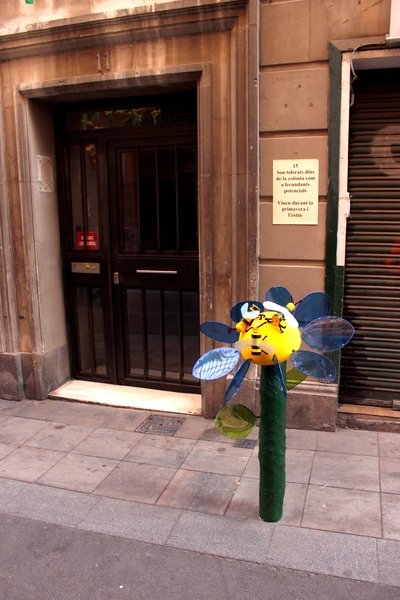
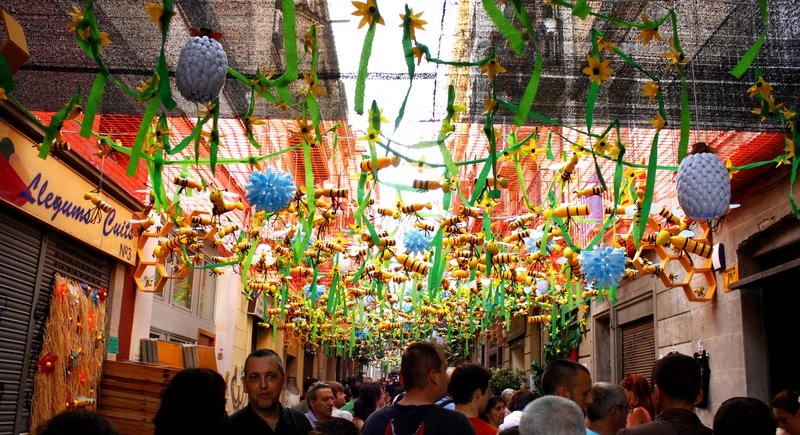
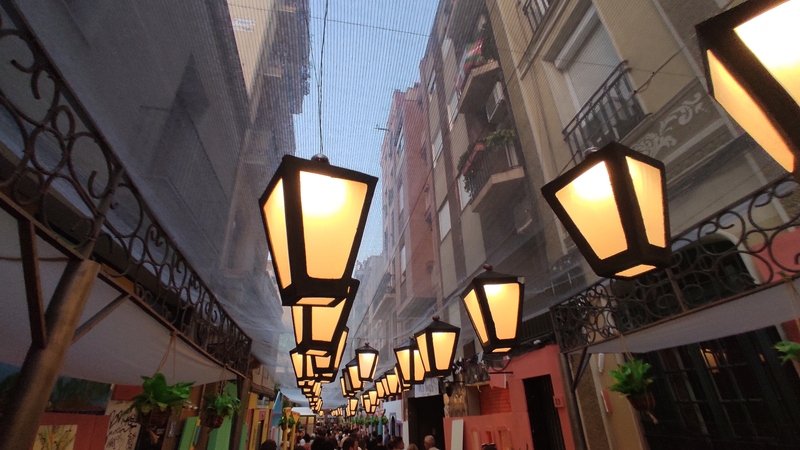
One of the most magical parts of the festival is walking through the narrow lanes of Gràcia and encountering streets transformed into artistic worlds.
Each participating street selects a theme, and the neighbors collaborate for months, building archways, scenes, sculptures, and lighting. Materials often come from recycled objects: plastic bottles, cardboard, fabric, metal—this gives the decorations a creative, sustainable touch.
There is also a friendly competition among the streets to win the prize for the best decoration, which means you’ll see incredibly high levels of imagination and craftsmanship.
Travel tips:
- Visit earlier in the day to appreciate the details in natural light, and return after dark to see the lighting effects.
- Explore smaller streets to avoid the biggest crowds.
- Aim for mid-afternoon if you prefer a more relaxed stroll at Festa Major de Gràcia.
Curiosity: Some themes are inspired by movies, global issues, or even fantasy worlds. One year, an entire street became an underwater kingdom built from recycled materials.
Food & Local Dishes – Tastes of Gràcia
No festival is complete without food, and at Festa Major de Gràcia, you’ll find a mix of Catalan dishes, snacks, and community meals.
Many neighbourhood associations host popular meals where locals and visitors share long tables under the decorated streets. Typical dishes include botifarra amb mongetes (Catalan sausage with beans), fideuà, paella, calçots, and various tapas.
Don’t miss the sweet side—churros, crepes, and gelato are everywhere, and local bakeries often prepare special festival pastries.
Here is the address of the official website of Festa Major de Gràcia
Travel tips:
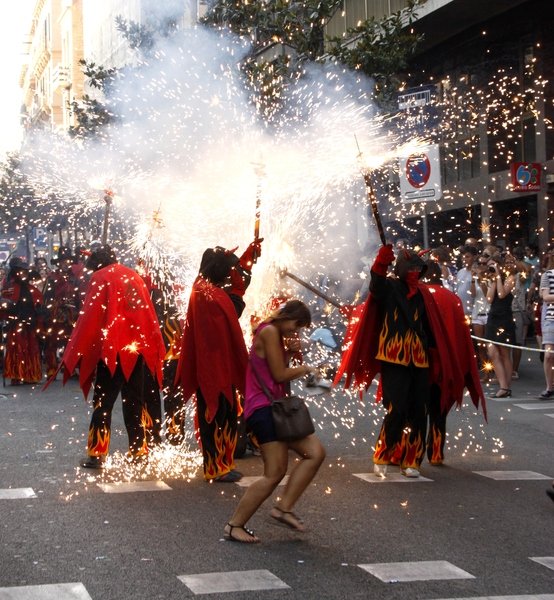
- If you join the fire-run, wear cotton clothing, long sleeves, and closed shoes.
- Go early to Plaça de la Vila for a good view; the area fills up quickly.
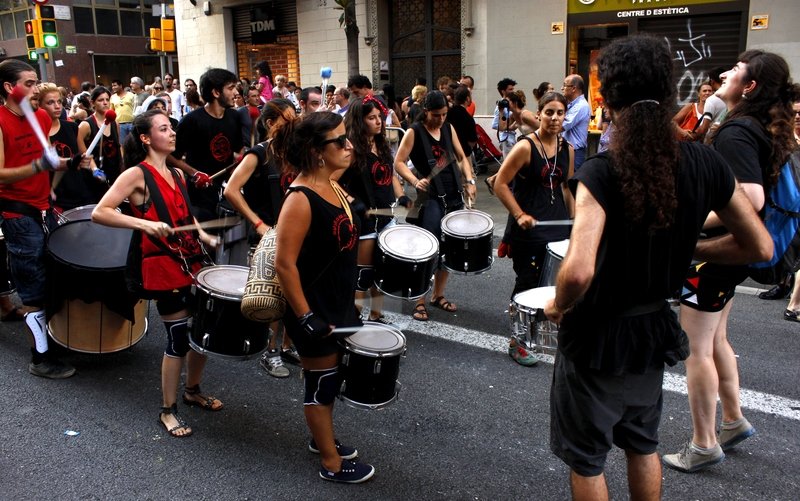
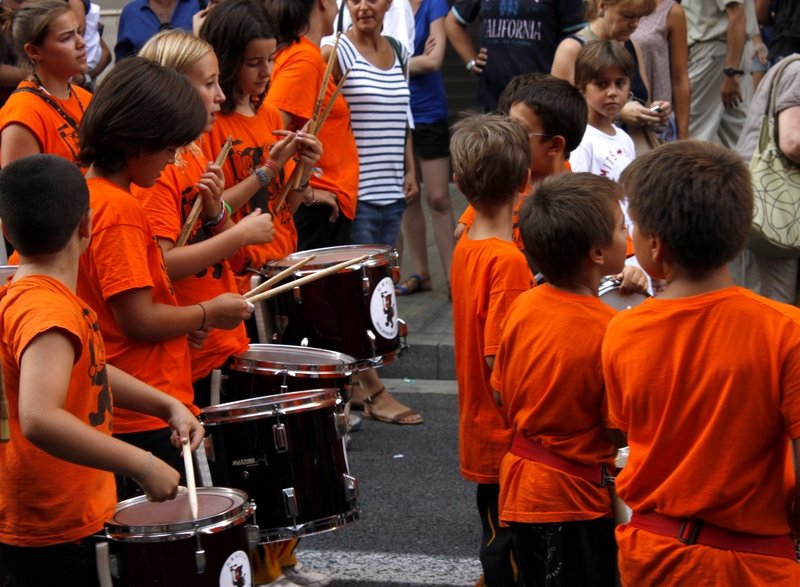
- Listen for the drum and chant before each tower—those sounds mark the start of a new attempt.
- Protect children from loud noises and sparks.
- Bring some cash; not all food stalls accept cards.
- Arrive early for the community dinners—they fill up fast.
- Try small side-street stands for more local, family-made options.
Curiosity: Many neighbors cook together for weeks in advance, making food a symbol of community as much as celebration.
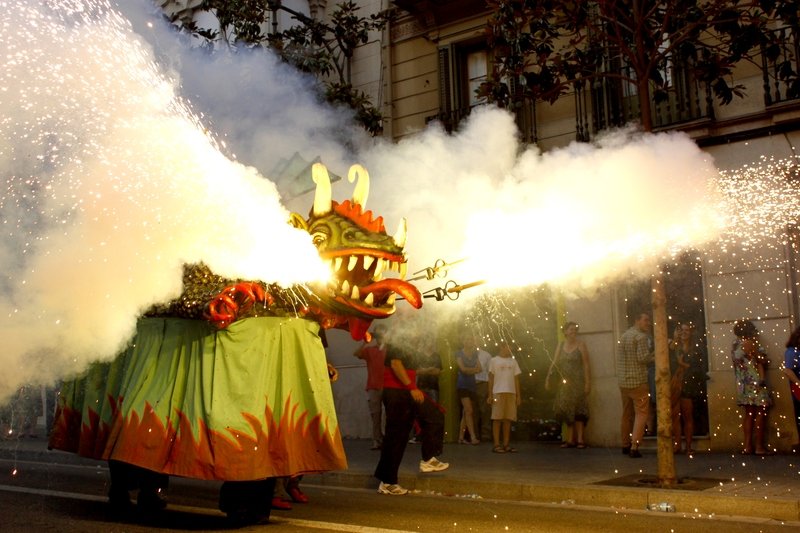
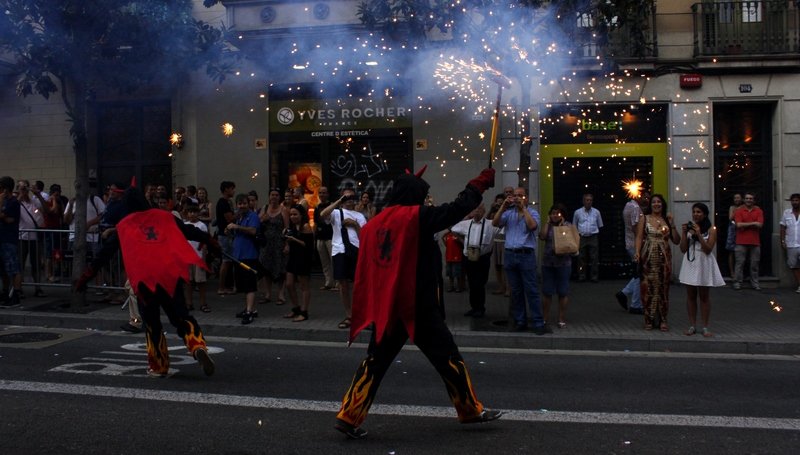
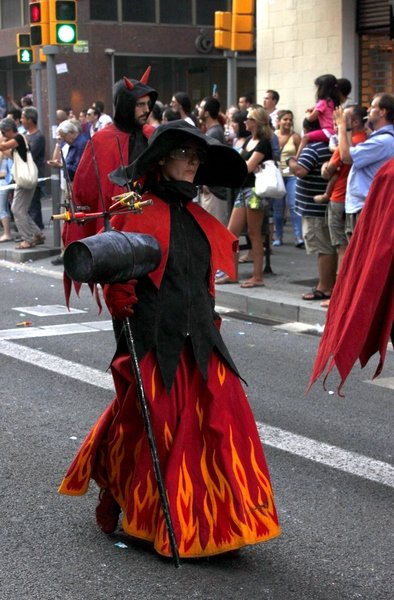
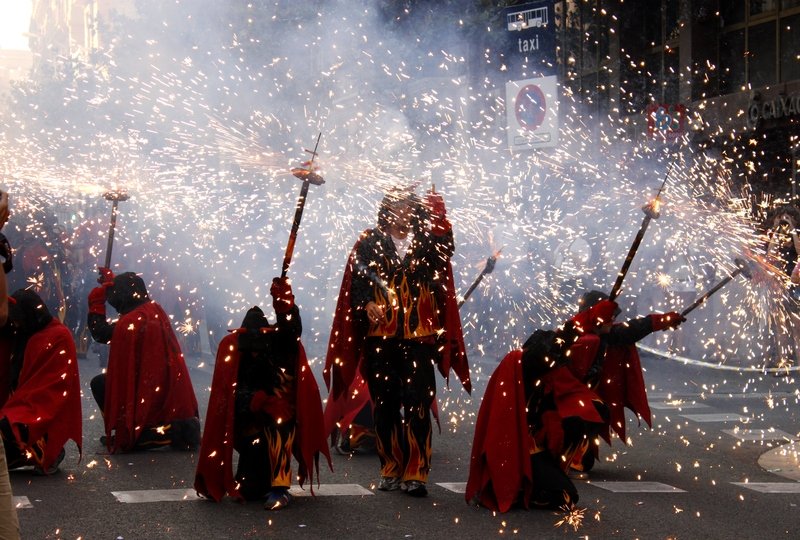
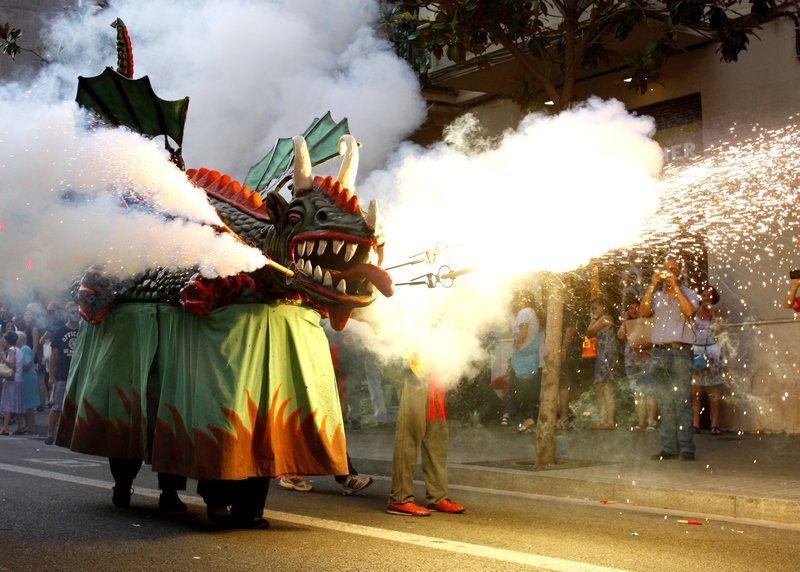
The “correfoc” fire-run is a symbol of Catalan culture, blending ancient rituals with modern celebration, and its energy is unlike anything else in Europe.
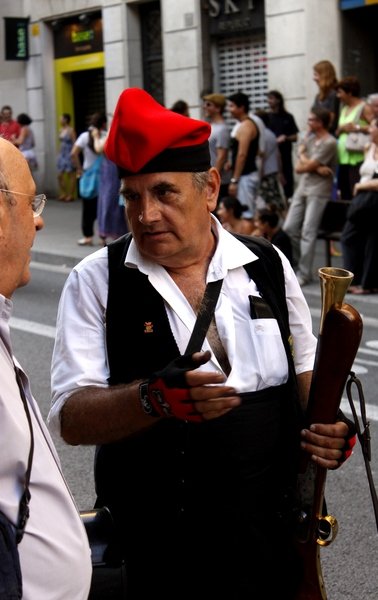
Parades, Dancing, Fire & Tradition
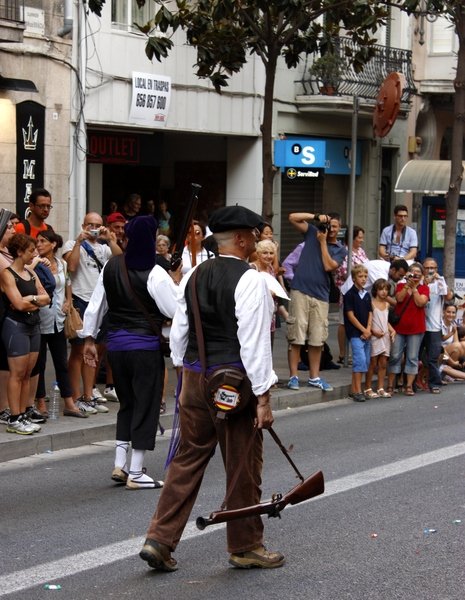
The streets come alive with rhythm, fireworks, and Catalan traditions during Festa Major de Gràcia.
- Bastoners (stick dancers): Groups of dancers perform traditional routines using wooden sticks, striking them rhythmically in pairs.
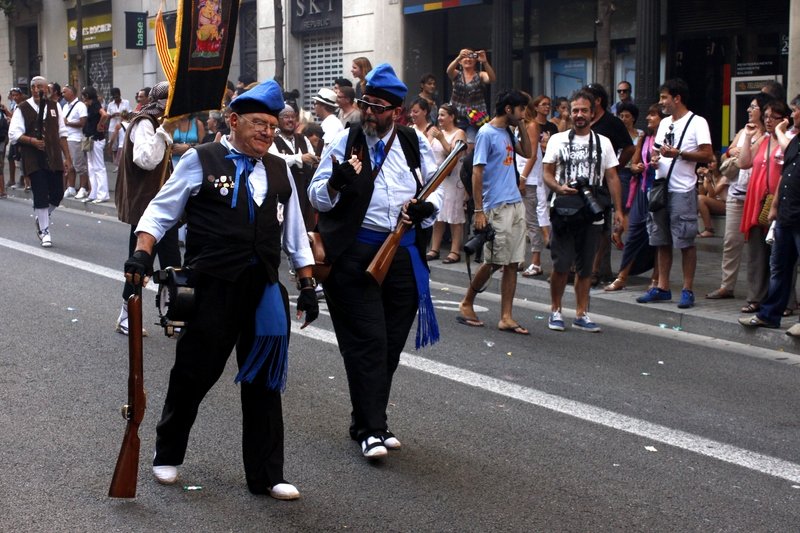
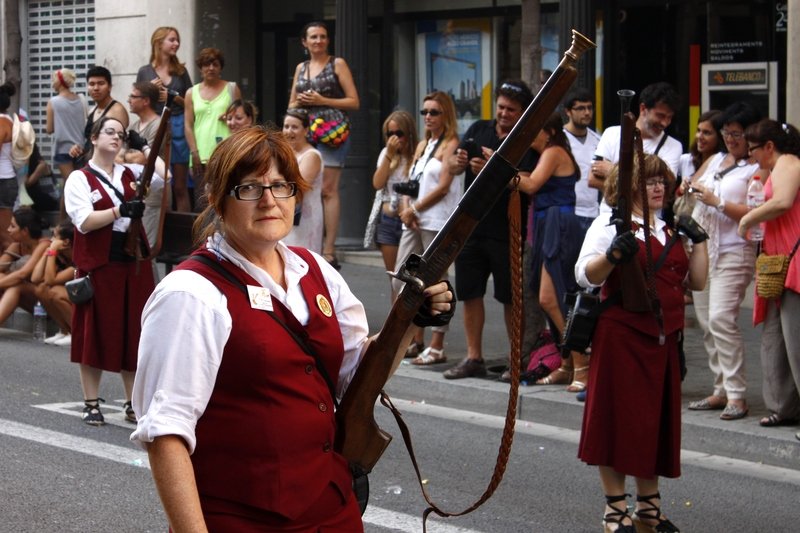
- Trabucaires (gunpowder carriers): These participants use old muskets to fire loud ceremonial salvos, filling the air with smoke and excitement.
- Correfoc (fire-run): Perhaps the most thrilling event—devils, dragons, and fireworks race through the streets, sparks flying as crowds dance under the flames.
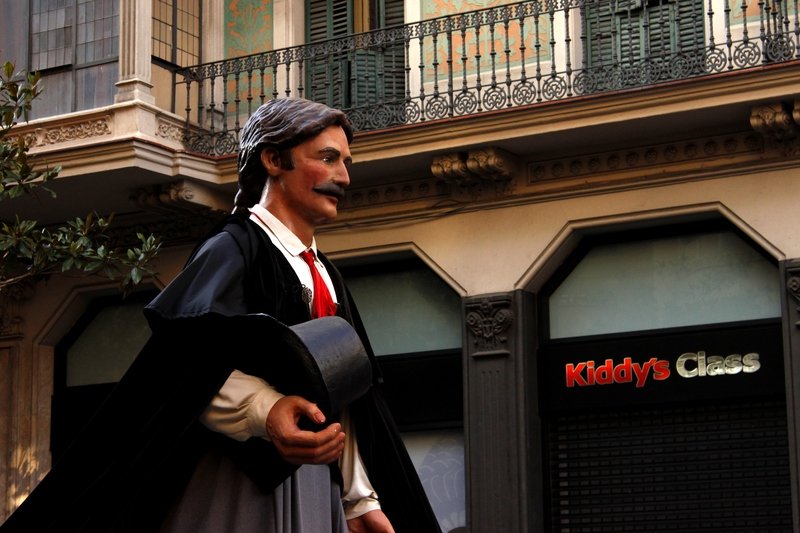
- Gegants & Capgrossos (giants and big-heads): Enormous figures representing local heroes or legends parade through the streets, moving to the beat of drums and flutes.
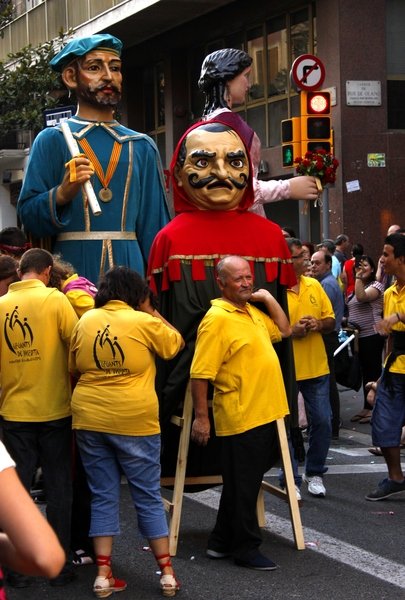
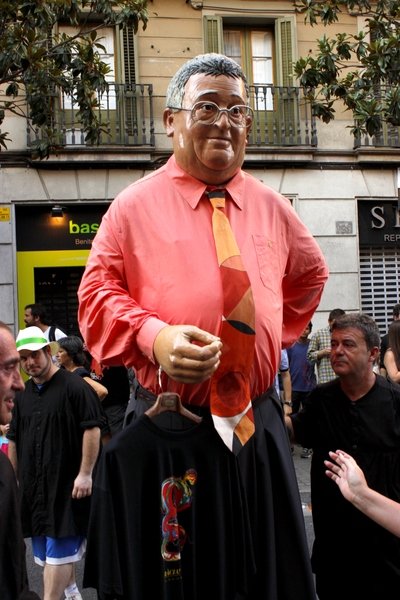
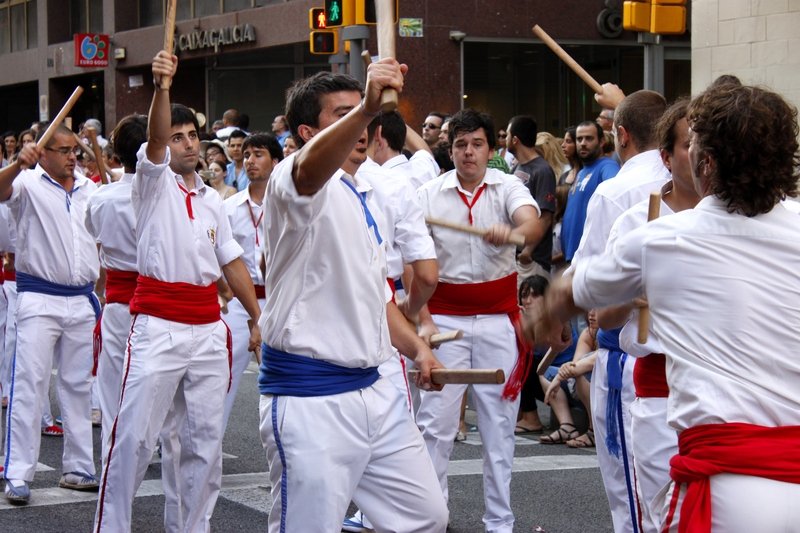
Human Towers – Castellers in Gràcia
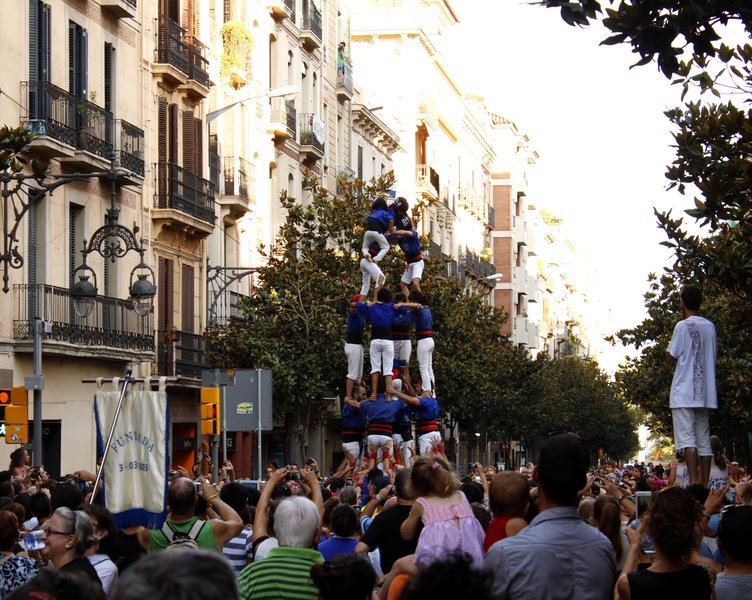
Human towers, known as castells, are one of Catalonia’s most unique traditions, and you’ll see them proudly displayed during Festa Major de Gràcia.
The local group, Castellers de la Vila de Gràcia, forms breathtaking towers of people standing on each other’s shoulders—sometimes up to eight or nine levels high. The youngest member, often a small child called the enxaneta, climbs to the top and raises a hand to signal success.
Curiosity: Each casteller wears a long sash, called a faixa, used both for back support and as a climbing aid for the others.
Practical Travel Tips – Getting There, Costs & Hidden Gems
When and where:
The festival usually takes place around 15–21 August in the Gràcia district of Barcelona. The main areas are around Plaça de la Vila, Gran de Gràcia, and Travessera de Gràcia.
Transport:
Take the Metro to stations like Joanic (Line 4) or Fontana (Line 3). Expect many streets to be pedestrian-only during the festival.
Costs:
Most of the festival is free—you’ll only spend on food, drinks, or souvenirs. Accommodation prices rise in August, so book in advance.
Hidden gems & advice:
- Visit the smaller, less famous streets for a more local feel.
- Early in the week is quieter and great for taking photos.
- Escape to nearby Parc Güell for a break and panoramic views.
Safety:
Respect the locals—they work hard to decorate their streets.
Be cautious with personal belongings in crowded areas.
Wear comfortable shoes; you’ll walk a lot.
Curiosity: After Festa Major de Gràcia, all decorations are dismantled and recycled, giving this event a short but beautiful life.
My Favourite Moments & Why You Should Go
Watching a human tower rise, surrounded by silence and anticipation, is unforgettable. Walking through streets turned into enchanted worlds made from recycled materials feels magical. Hearing the echoes of drums and fireworks early in the morning reminds you that this is a celebration built on centuries of tradition.
Sharing a meal with locals under twinkling lights, feeling like part of their community, and ending the night with fireworks over old rooftops—these are the memories that stay forever.
Festa Major de Gràcia is not just a festival. It’s a story about creativity, unity, and the power of people coming together.
Final Words
If you’re looking for a festival that combines history, art, fire, and heart—Festa Major de Gràcia is waiting for you.
Plan your trip, walk slowly through the decorated lanes, eat, dance, and let yourself be carried by the energy of Barcelona’s most local and colourful celebration. If you planing to visit Barcelona soon, you can read my other articles for this amazing city: La Pedrera Barcelona: More Than a Building, a Living Artwork, Montjuïc Castle: History, Silence and the Best View Over Barcelona, Barcelona Beyond the Center: Discovering the Labyrinth of Horta, One Day in Montjuïc: How to Explore Barcelona’s Olympic Mountain.
Let the world guide your footsteps and your soul, dear travelers!