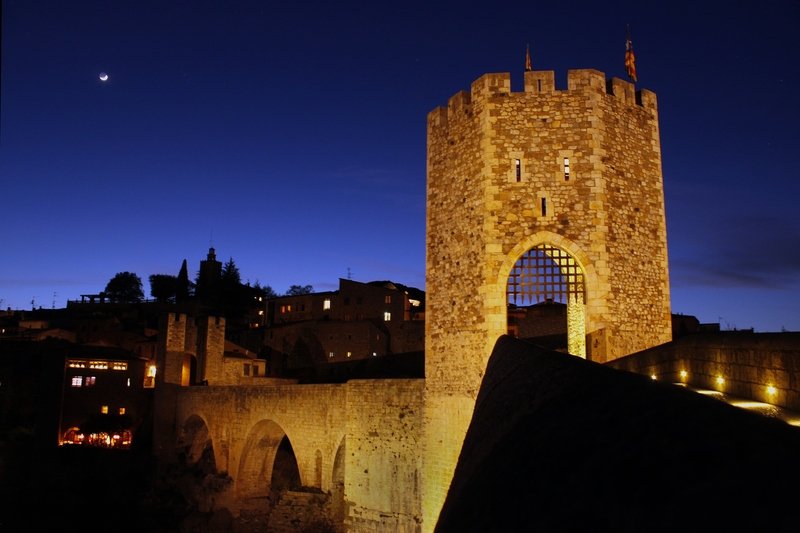
Besalú is a small town in Catalonia, but its history is deep and powerful. When you arrive, modern life stops at the edge. The medieval bridge welcomes you, and from that moment, everything feels slower.
The town is easy to reach by car or bus. Many people come for a short visit, but Besalú deserves more time and quiet walking.
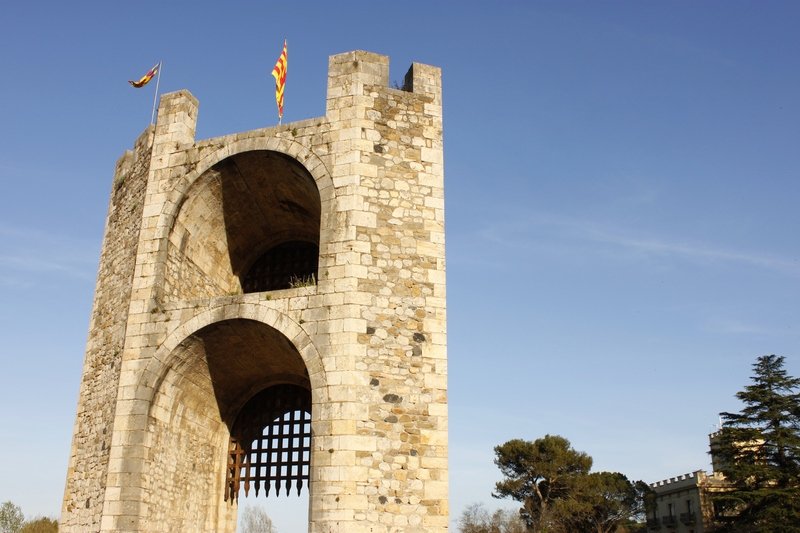
The Medieval Bridge – Stone, Defense and Cinema
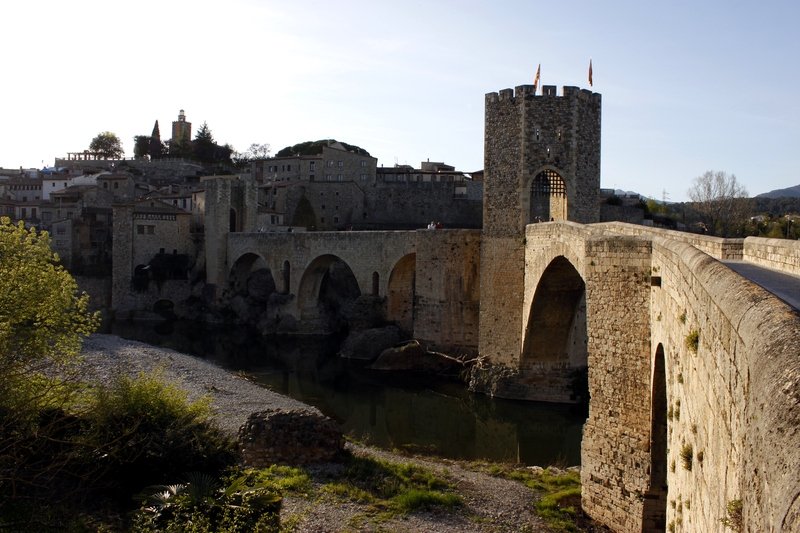
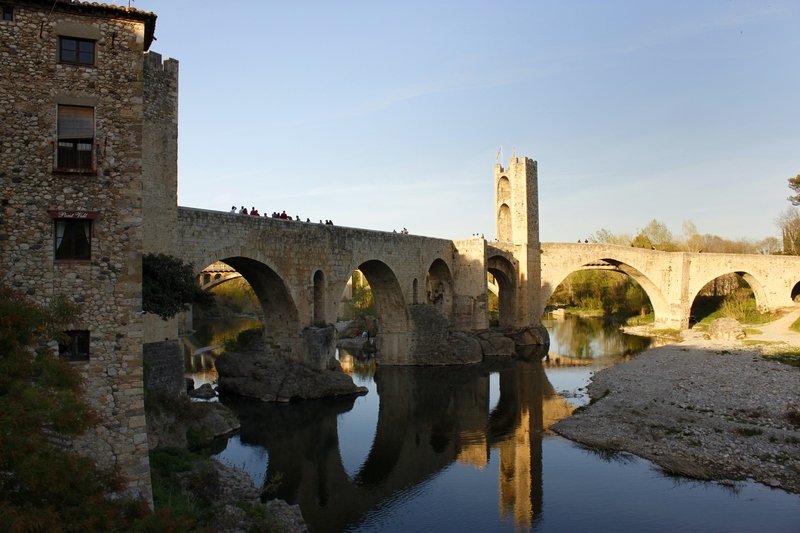
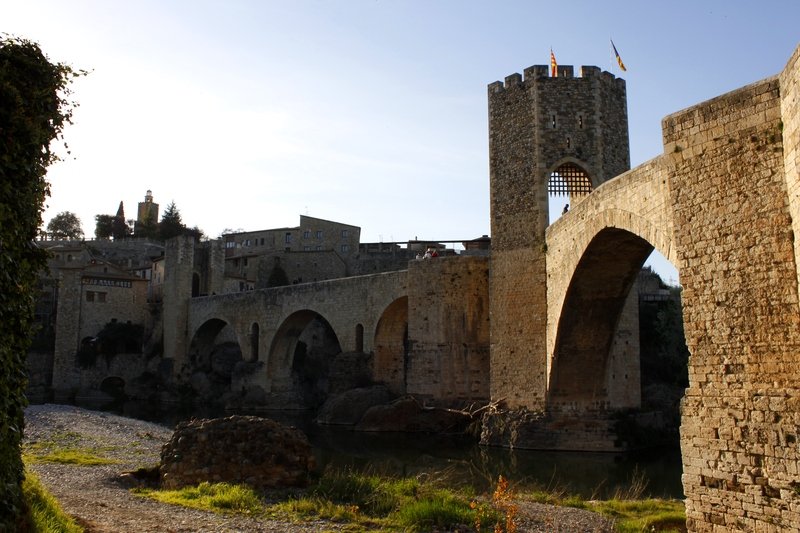
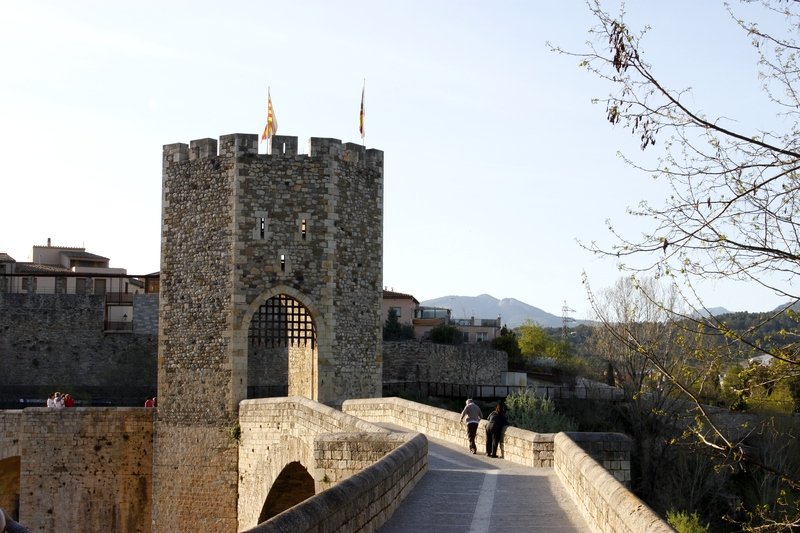
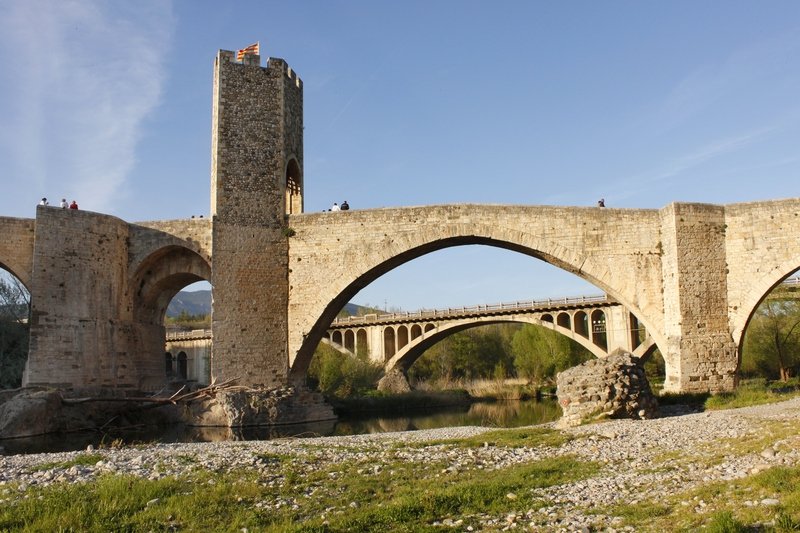
The medieval bridge of Besalú, built mainly in the 11th and 12th centuries, is one of the most iconic in Spain. It was designed for defense, not beauty, with a strong tower controlling entry into the town.
Walking across the bridge, you feel the uneven stones under your feet. This bridge was once crossed by merchants, soldiers, and pilgrims.
Historical and cultural note:
The bridge was used as a filming location for “Perfume: The Story of a Murderer” (2006), chosen for its authentic medieval appearance and untouched surroundings.
Besalú’s Real History – From Romans to Counts
Besalú existed before the Middle Ages. Romans settled nearby, but the town gained power during medieval times as the capital of the County of Besalú.
Between the 10th and 12th centuries, it was an important political and religious center. Churches, monasteries, and walls shaped the town. When the county lost independence, Besalú slowly faded — and that is why it survived so well.
No large modern rebuilding ever changed its medieval structure.
The Jewish Period – One of Besalú’s Most Important Chapters
During the Middle Ages, Besalú had a strong Jewish community. Jewish residents played an important role in trade, medicine, and daily urban life.
One of Besalú’s most significant historical sites is its medieval Jewish ritual bath, one of the best preserved in Europe. It was used for religious purification and is a rare survival from Jewish life before expulsion.
Historical fact:
The Jewish community was forced to leave in the late 15th century, leaving behind silent spaces but lasting history.
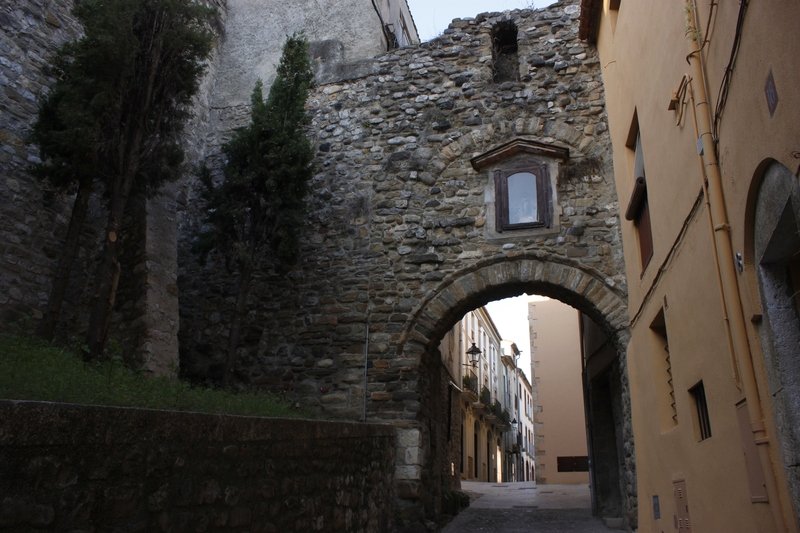
The Chairs on the Walls – Art, Symbolism and Modern History
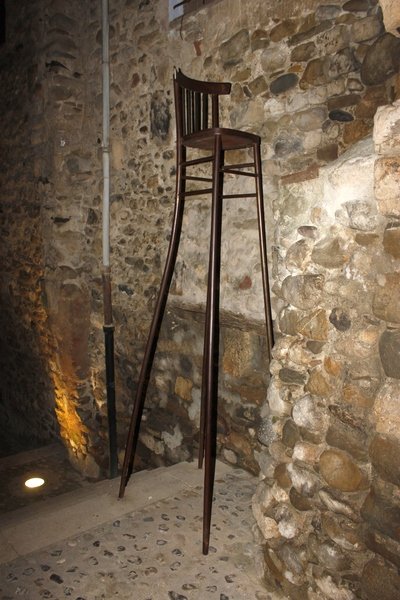
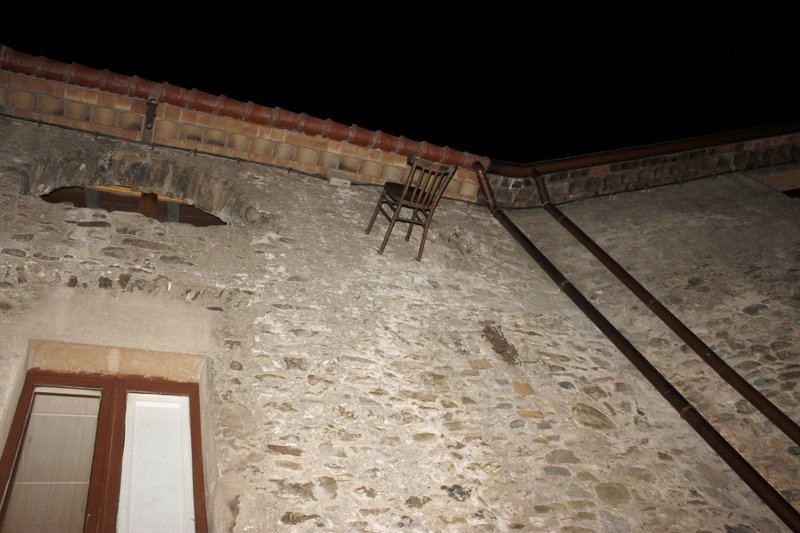
While walking through the medieval streets of Besalú, you may suddenly notice something unexpected: chairs fixed to the stone walls, placed in strange positions where no one can sit.
These are not medieval objects. They are part of a modern art installation known as “Cadires del Carrer Rocafort” (Chairs of Carrer Rocafort).
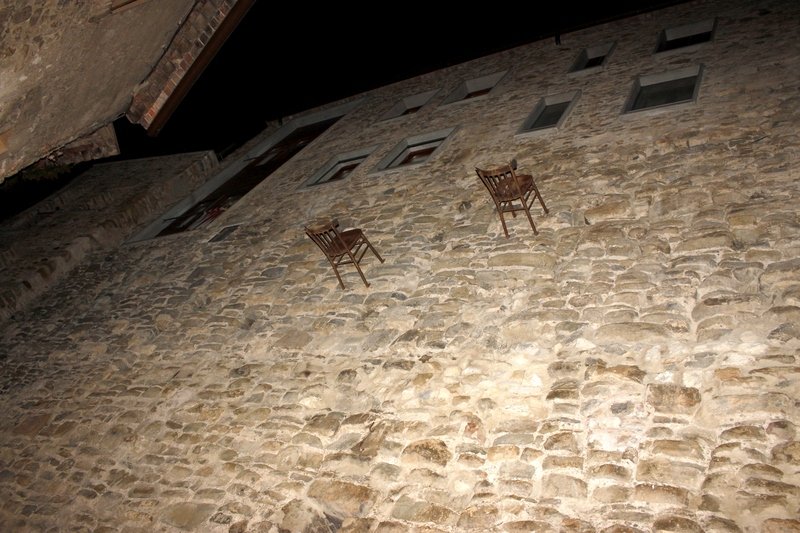
The chairs were created in 1994 as part of an artistic exchange between the Italian region of Frosinone and the Girona Provincial Council. The artist behind this work is Ester Baulida, working together with international collaborators.
According to the artist, these chairs symbolize the difficulties humanity faces in reaching its goals and solving the problems it must confront. The chairs are visible, familiar objects, but they are placed where they cannot be used. This creates a feeling of frustration and reflection.
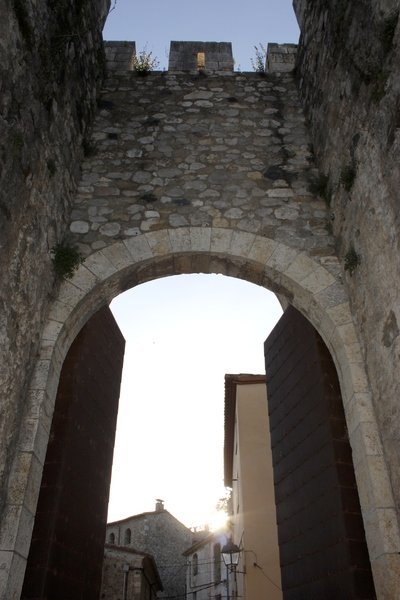
Curious detail:
Many visitors first think the chairs are ancient or decorative, but they are intentionally modern, meant to contrast with Besalú’s medieval stone walls.
Another curiosity:
Because the chairs are attached high or at odd angles, they invite questions. Why are they here? Why can’t we sit? This interaction between confusion and thought is exactly the purpose of the artwork.
Today, these chairs have become a quiet landmark of Besalú. They show how modern art can exist respectfully inside an ancient city, adding new meaning without changing the past.
Churches and Sacred Architecture
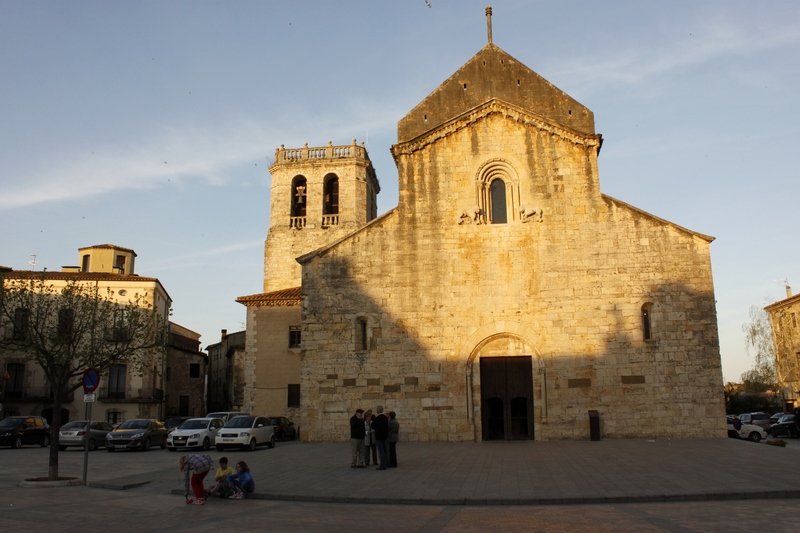
Besalú is home to important Romanesque churches built with thick stone walls and simple lines. These buildings reflect a time when religion, safety, and community were closely linked.
Inside, decoration is minimal. Stone, light, and silence create a strong spiritual feeling.
Walking Besalú – Details That Reward Slow Travel
Besalú is best explored on foot. Look closely and you will notice:
- worn steps shaped by centuries
- old wooden doors
- carved stones reused from Roman times
- quiet corners hidden from crowds
Early morning or late afternoon is the best time to feel the town’s true atmosphere. You can combine Besalu in daily trip with Castellfollit de la Roca and Parc Garrell of Josep Pujiula in Argalaguer. Check my other articles for more details and organize your perfect tour in North Catalunya.
Practical Travel Tips
- Visit early or stay late for fewer visitors
- Respect historic and religious spaces
- Plan at least half a day
- Official Website of Besalú
Costs and Useful Information
- Walking the town is free
- Food and drink prices are fair
- The town is compact and easy to explore
Why Besalú Feels So Special
The place is authentic. It is preserved. Its bridge, Jewish heritage, stone chairs, and untouched streets tell real stories — not designed for tourists, but shaped by life. Besalú does not entertain. It remembers. A True Medieval Town Frozen in Time.
Keep your heart open and your passport ready