Entering a Peaceful Corner of Barcelona
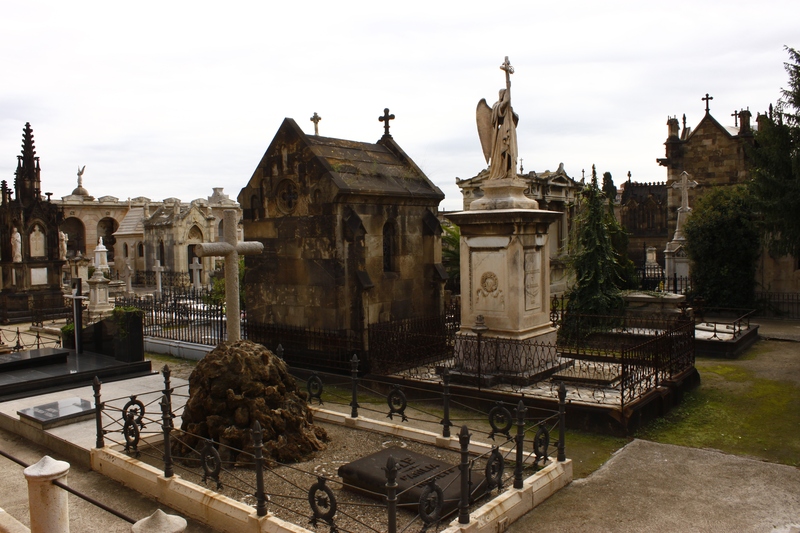
This time my curiosity led me to Cementiri del Poblenou, one of Barcelona’s oldest cemeteries and a real open-air museum. The moment you pass the entrance gate, the busy world feels distant. The long, straight alleys, the white stone, the shadows of tall cypress trees—everything creates a calm and almost poetic atmosphere.
A Short History of Cementiri del Poblenou
The cemetery was originally built in the 18th century. Barcelona needed a safe place outside the old city walls to bury victims of plagues and epidemics. Over time, it became not only a burial ground but also a place where families showed their status through artistic tombs and sculptures.
The cemetery was rebuilt in the 19th century after being destroyed during a political revolt. This is why today you will find a mix of neoclassical, romantic, and modernist styles—reflecting how Barcelona grew and changed through the centuries.
The Full Story of “The Kiss of Death” – Creator, Meaning & History
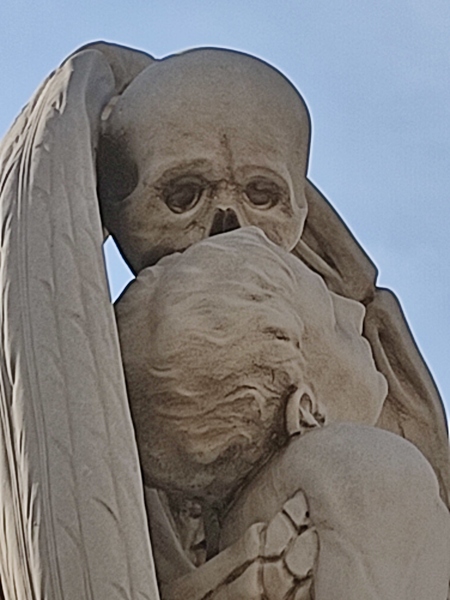
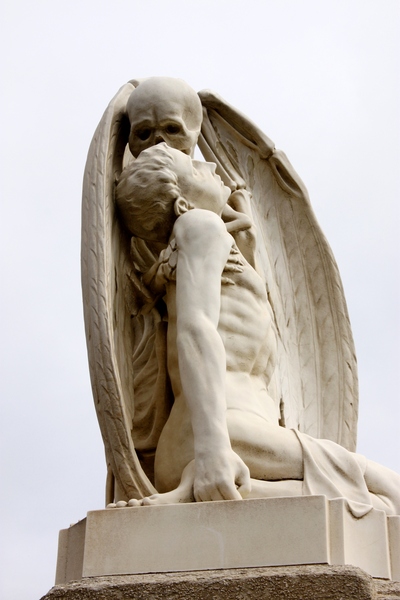
“The Kiss of Death” (in Catalan “El Petó de la Mort”) is the most famous sculpture inside Cementiri del Poblenou, and honestly, one of the most striking monuments I have ever seen in a cemetery.
Who Created It?
The sculpture was officially created in 1930 by the Barcelona sculptor Jaume Barba, a craftsman known for his work on funerary art.
However, there is an interesting curiosity:
Many historians believe that the original design might have been made by Joan Fontbernat, Barba’s father-in-law. This has created a small mystery in Barcelona art history—who truly “imagined” the Kiss of Death?

The common agreement today is:
- Jaume Barba: sculptor who carved the monument
- Joan Fontbernat: likely provided the artistic design
This combination is part of what makes the sculpture so unique.
The Original Purpose
The statue was created for the Llaudet family tomb, a respected Catalan family from the early 20th century.
They wanted a powerful and dramatic symbol on their family grave—something that would speak about the fragility of life and the sudden arrival of death.
And Barba delivered exactly that.


What the Sculpture Shows
The artwork represents a winged skeleton gently kissing the cheek of a young man.
The man’s body is soft and peaceful, suggesting he is accepting his fate rather than fighting it.
This contrast between the cold bones of death and the beauty of youth creates an emotional scene that leaves a strong impression on visitors.
What Does It Mean?
There are several interpretations:
- Death arrives suddenly, without warning
- Death is not always violent—sometimes it comes softly, like a kiss
- Youth and strength cannot escape the passage of time
- The sculpture shows a moment of transition, not fear
Some say this monument might have been inspired by Romantic and Symbolist movements, where death was often seen as a tragic but poetic figure.

Why It Became So Famous
The Kiss of Death became known for several reasons:
- Its unusual combination of skeleton + kiss + beauty
- Its deep philosophical symbolism
- Its high artistic quality
- Its emotional balance between fear and peace
Today many visitors come to the cemetery only to see this sculpture, and it has become one of the most iconic funerary artworks in Spain.
Interesting Curiosities
- The sculpture has been used in several photography exhibitions and is considered one of the most photographed cemetery statues in Europe.
- It has inspired poems, songs, and short films in Catalonia.
- Art critics compare it to European Symbolist sculptures from the late 19th century, even though it was made in 1930.
- Despite its sad subject, many locals say it brings “calm” instead of fear.
Standing in Front of It
When you see it in person, it’s hard not to stop for a long moment.
The details of the bones, the wings, and the smooth marble of the young man’s skin are incredibly well made.
It feels dramatic, artistic, and strangely peaceful at the same time.
This monument alone makes the cemetery a must-visit place for lovers of art, history, and symbolism.
Other Unique Tombstones and Sculptures
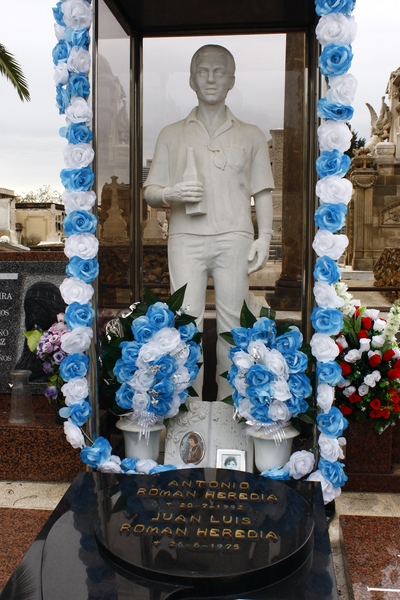
Cementiri del Poblenou is full of surprising details. While walking, I found something interesting — a statue of a young man inside a glass urn. It felt so human and warm, like a little snapshot of a cheerful personality kept in stone forever. It belongs to Antonio Román Heredia, known as “El Pote”, a man remembered in the Gipsy community of Barcelona. He was “cuñado” of “El Vaquilla” – both famous gangsters from the end of 70’s till the end of 80’s – Barcelona’s “Quinqui” times.
His tomb is striking because it features a life-like statue of him in a glass urn, holding personal items like a bottle and sunglasses.

There are many such personal and interesting details in the cemetery:
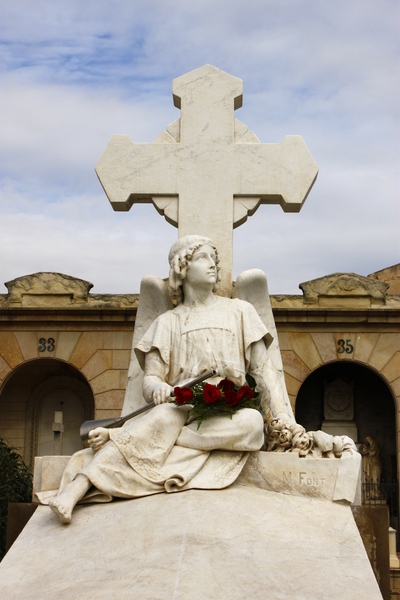
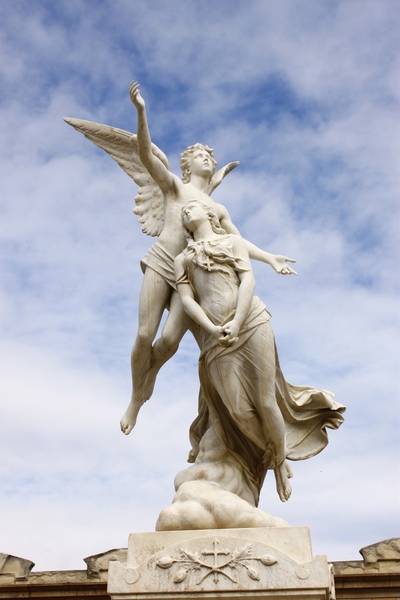
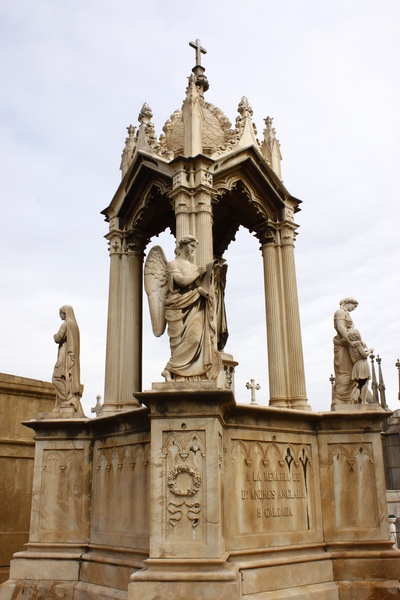
- Angels leaning over tombs as if protecting loved ones
- Modernist tombs with floral patterns
- Tombs of sailors decorated with anchors
- Statues of children holding books or toys
- Family vaults with gothic arches
Every alley tells a new story.
Curiosities That Make Poblenou Special
- Some tombs show the profession of the person buried there—bakers, sailors, musicians.
- The cemetery has two levels: the monumental part and the simpler “niche walls,” which show the social structure of old Barcelona.
- Many families placed photos on tombs; some are over 100 years old.
- The cemetery was once used as a place to show early Catalan sculpture styles, so it’s important for art history.

How to Visit Cementiri del Poblenou
Even if visiting cemeteries is not your usual plan, this one is peaceful, artistic, and full of stories worth discovering.
How to Get There
- Metro: L4 (Yellow Line) → Stop: Poblenou or Llacuna.
From either stop, it’s a short walk through the neighborhood. - Bus: Several local buses stop close to the cemetery.

Entrance Cost
- Free entry, which makes it perfect for travelers on a budget.
Best Time to Visit
- Early morning or late afternoon for soft light and shadows.
- Avoid strong midday sun—it becomes very bright because of the white stone.
Food & Nearby Spots
Poblenou is a great neighborhood for food:
- Try a local bakery for ensaimadas or cocas.
- Rambla del Poblenou, close by, offers affordable restaurants where both tourists and locals eat.
- Walk 10 minutes and you reach the beach—perfect after a reflective visit.
Hidden Gems Nearby
- Small modernist buildings around Poblenou district
- Old factories converted into art studios
- Quiet residential parks where locals relax
Why Visit a Cemetery in Barcelona?
Because this cemetery is not dark or scary—it’s peaceful and artistic.
It tells the story of Barcelona through sculptures, architecture, and everyday people. For me, it was one of the most unexpected and inspiring places I visited in the city.

Carry curiosity, leave footprints, return with tales